The power of data and digital. Understanding the impact of The Digital Revolution
Blog
The power of data and digital. Understanding the impact of The Digital Revolution
Authored By: SDI Plastics
The process of change
This process began in Britain, and moved across to the other parts of the world, with the 1st Industrial Revolution occurring at the end of the 18th century, which used water and steam power to mechanise production. The 2nd Industrial Revolution began in the nineteenth century with the age of science and invention of electricity. This was the enabler into mass production.
The 3rd Industrial Revolution, known as the Digital Revolution, blossomed with the shift from mechanical and analogue electronic technology to digital electronics and began in the later half of the 20th century, the late ‘60’s. It is characterised by the spread of automation and digitisation through the use of electronics and computers, the early invention of the Internet, and the discovery of nuclear energy.
The 4th Industrial Revolution represents a fundamental change in the way we live, work and relate to one another. It is a new chapter in human development, enabled by extraordinary technology advances compared with those of the first, second and third industrial revolutions.
Industry 4.0 as we know it, has started since the turn of the 21st century. What this means is that businesses and society are facing one of the biggest structural changes of the past 250 years. This transformation, complexity and scale of work is unlike anything humankind has had to deal with before.
This article takes a deeper look into the fundamentals of the 4th Industrial Revolution, and how through the advances of technology, we are already moving from Industry 4.0 and sliding quietly into Industry 5.0.
Industry 4.0 explained
The mindset behind Industry 4.0 is to ‘re-imagine industry’ and to deliver a much faster, smarter and sustainable productivity. It is about connecting production and operations with digital technologies to enable enterprises to use data to drive intelligent decisions.
Industry 4.0 brought together a wide range of technology breakthroughs. It’s about combining the digital and physical words to create the next generation of operational excellence and employee satisfaction, whilst delivering value to customers. Taking advantage of emerging capabilities, smart and connected technologies such as robotics, artificial intelligence (AI) and the Internet of Things (IoT). The goal is to create a more holistic and better connected ecosystem for companies that focus on manufacturing and supply chain management.
The rate at which data is transferred is just stunning, as is the paradigm shift in technology policy. Industry 4.0 genuinely heralds the dawn of the Imagination Age. Deploying smart automation, connectivity and operational alignment, the design, manufacturing and servicing of products will enable ‘mass customisation’ at speed and scale.
Companies need to take advantage of Industry 4.0 and its evolution now. This will help businesses gain a competitive edge. The key is to start your journey.
The benefits of Industry 4.0
The key benefits of Industry 4.0 most definitely include improved efficiency, productivity, agility and increasing profitability to a business. Industry 4.0 also delivers an exceptional customer experience, giving true value to hyper optimised and personalised products and services.
Additional benefits to the 4th Industrial Revolution include:
- Building smart manufacturing and smart factories through optimisation
- Supply chain efficiency
- Personalised products and services
- Long term cost reduction
- Develop sustainable manufacturing practices and reducing environmental impact by reducing waste and increasing resource efficiency
The adoption of Industry 4.0 is essential for companies to remain competitive in the global market. The technology advances will create untold opportunities for consumers and manufacturers looking to disrupt markets and find new ways of doing business.
Move over Industry 4.0, we are already talking about Industry 5.0
Even though Industry 4.0 has brought us incredible advances, there are still things we want to improve, including the role of humans in industry.
Machines require us to function correctly, and even though portions of their operations can be performed automatically, having a real, creative human being at the heart of every activity and working in sync with machines is the perfect partnership that Industry 4.0 cannot give.
It is the collaboration of humans and machines through smart technology and robotics that makes Industry 5.0 so exciting.
Industry 5.0’s current state of innovation
The roundtable discussion on Industry 5.0 was held on 27 April 2022, and brought together industrial leaders from major European companies and SMEs, as well as representatives from trade unions and other stakeholders. This was the beginning of the next revolution, Industry 5.0.
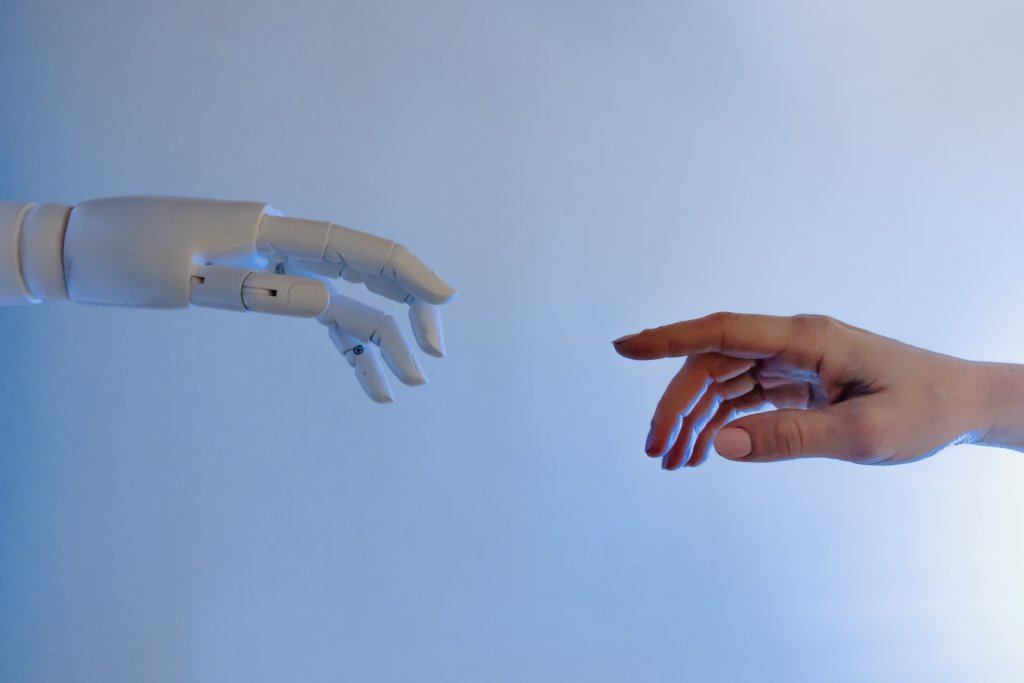
Industry 5.0 is the ultimate collaboration of intelligent humans and intelligent industrial machines. Whereas Industry 3.0 introduced computers and automation to the globe and Industry 4.0 linked these technologies to boost efficiency and production, Industry 5.0 emphasises human interaction, and connecting man and machine. That is, a collaboration between humans and smart systems by leveraging advanced technologies.
It aims to give businesses complete creative control over the interconnected systems generated by Industry 4.0, allowing us to collaborate with robots and intelligent machines. It all boils down to assisting us to work faster, smarter and better by harnessing sophisticated technologies like the Internet of Things (IoT), robotics and big data.
Industry 5.0 is heavily focused on both industry and society, and it will help influence how both are transformed and evolve in the approaching Technology Age.
Important factors to consider with Industry 5.0
Industry 5.0 is intended to assist, not replace, humans. It is a new phase of industrialisation, whereby humans work alongside advanced technologies and AI-powered robots to enhance processes within the workplace.
There is a stigma relating to Industry 5.0 within society and companies alike. The prospect of robots and AI taking over jobs, and people losing their employment, the prospect of economic hardship, and the dwindling value of “human interaction” are all common concerns.
However, Industry 5.0 is much more. It allows time to embrace a new combination of human-machine collaboration, so that the human race can liberate themselves to focus on those uniquely human capabilities that machines have not yet mastered, such as creativity, complex decision making, leading teams and empathy. Industry 5.0 aims to create an environment where people and robots and AI may interact to innovate. Its goal is not to replace humans but to perform repetitive tasks, which in turn enable creative and intelligent people to develop new technologies, creative ideas and strategic thinking.
The balance of efficiency and productivity is critical in Industry 5.0. Industry 4.0 began the process of increasing efficiency and production, while Industry 5.0 strives to optimise it completely. By adopting industry 5.0, industries are moving towards developing the smart social factory.
Industry 5.0 and building a sustainable future
Industry 5.0 provides us with an unprecedented opportunity to positively shape our planet. Industry 5.0 is built on the foundation of sustainability.
Industries and governments are all striving towards the UN’s Agenda 2030’s sustainable development goals (SDGs), and money is being awarded today to enterprises with substantial environmental, social, and governance (ESG) policies.
The fundamental aspect of these governmental laws, economic models, and climate control measures is sustainability, and Industry 5.0 can and will be the driving tool to a sustainable future. Innovation will be motivated by performance and its long term influence on the industry, commerce, society, and the environment.
What are the fundamental changes as we migrate from Industry 4.0 to Industry 5.0, and what problems might we face in making this transition?
One distinction between Industry 4.0 and Industry 5.0 is the emphasis on Challenge Driven Innovation (CDI). Companies and organisations worldwide are using CDI to work on long-term societal concerns to accomplish the sustainability goals outlined in Agenda 2030.
To tackle any given difficulty, it employs ‘challenge statements,’ which define critical emphasis areas. By recognising an issue, using CDI to focus on the challenge’s specifics and who is involved, and then using this information to make new modifications and end up with the desired solution, we can truly grasp the next stage of the revolution, Industry 5.0.
Sustainability is critical, and Industry 5.0 incorporates this notion by placing it at the heart of future operations.
Summary
There is enormous promise in the development of Industry 5.0, which we should not only capitalise on but also propel ahead. The transition has already begun. It is apparent that Industry 5.0 is the future and will alter our lives for future generations. As it spreads to every part of the globe, it is our job to seize it with both hands and do our best to adapt and add it onto our digital agenda.
While we are only at the top of the iceberg for the time being, this enormously exciting change is something we can all get behind to create a better, more innovative, and more advantageous future for every single human alive today.
If you haven’t already, you must begin to think about your lean i4.0 and your longer term vision of i5.0 strategy now, or be left behind as more businesses take the leap to greater autonomy and the disruption of traditional markets.
“We’re just at the start and already industry is beginning to be reshaped beyond recognition. The most important thing for any manufacturer today is just to start their journey.”
Book your free consultation
Give us a call to book your free consultation and learn how much value can be added to your business with SDI Plastics by your side.