
The benefits of overmoulding for complex products
Blog
The benefits of overmoulding for complex products
Authored By: SDI Plastics
Overmoulding, also known as in-moulding (IMA) allows multiple parts to be moulded and joined in one seamless process, reducing labour, improving reliability, and enabling smarter design for complex products. For manufacturers scaling from idea to market-ready production.
Why in-mould assembly matters now
Most industries are facing the same question: How do we make more, faster, without compromising on quality or sustainability?
Traditional manufacturing has long separated moulding from assembly. One team makes the part. Another joins the pieces. Yet with every handoff comes risk: higher costs, longer lead times, potential misalignments, and quality issues.
In-mould assembly changes the equation. By combining multiple steps into one, it offers precision that human labour alone cannot match. For companies navigating thin margins and demanding timelines, this shift is not just helpful, it’s transformative.
What is in-mould assembly?
At its core, in-mould assembly integrates multiple components, plastic to plastic, or plastic to inserts like metal or electronics, directly inside the moulding process.
Instead of moulding a part, moving it, aligning it, then fastening it with adhesives or screws, the joining happens in-situ. The mould itself becomes the stage where assembly takes place.
Think of it like baking a layered cake where the icing is applied while it’s still in the tin. No transfer, no mess, no chance of misalignment.
The direct benefits of in-mould assembly
1. Reduced production costs
- Eliminates secondary assembly operations
- Cuts labour requirements
- Reduces energy usage from additional machinery
A single moulding cycle can replace hours of downstream work.
2. Higher product reliability
- Fewer fasteners, adhesives, and manual steps mean fewer points of failure
- Stronger bonds between components, especially under load
- Greater consistency across large production runs
When a joint is created as part of the product itself, it becomes structurally integrated, not simply attached.
3. Design freedom for complex products
- Allows embedding of inserts (metal shafts, sensors, wiring) directly into parts
- Supports miniaturisation for electronics and medical devices
- Enables lighter, stronger products through integrated structures
This isn’t just manufacturing, it’s design liberation. Engineers can rethink what’s possible when parts don’t need to be assembled later.
4. Faster time-to-market
- Streamlines workflow from CAD design to finished part
- Reduces supply chain complexity by cutting out multiple vendors
- Shortens prototype-to-production timelines
Speed matters. Especially for startups racing competitors or established players updating product lines.
Where in-mould assembly is already winning
Automotive
From dashboards with integrated vents to multi-material gears, automakers use IMA to reduce weight and improve safety. Reliability is non-negotiable in this sector, IMA delivers it at scale.
Medical devices
Inhalers, syringes, and diagnostic tools require precision, sterility, and cost efficiency. In-mould assembly ensures consistent quality while reducing contamination risk.
Consumer electronics
Overmoulded connectors, headphone parts, and wearables use IMA to shrink form factors while strengthening durability.
Industrial equipment
Seals, gaskets, and complex housings benefit from integrated inserts, reducing leaks and extending lifespan.
The hidden system: why it works
Every production process sits at the intersection of three constraints:
- Cost
- Time
- Quality
Traditional assembly struggles to optimise all three simultaneously. Improve one, and the others suffer.
In-mould assembly is different. By collapsing processes into one, it bends the triangle: reducing cost and time while maintaining, or even enhancing, quality.
That’s rare in manufacturing. And it’s why IMA is gaining momentum across sectors.
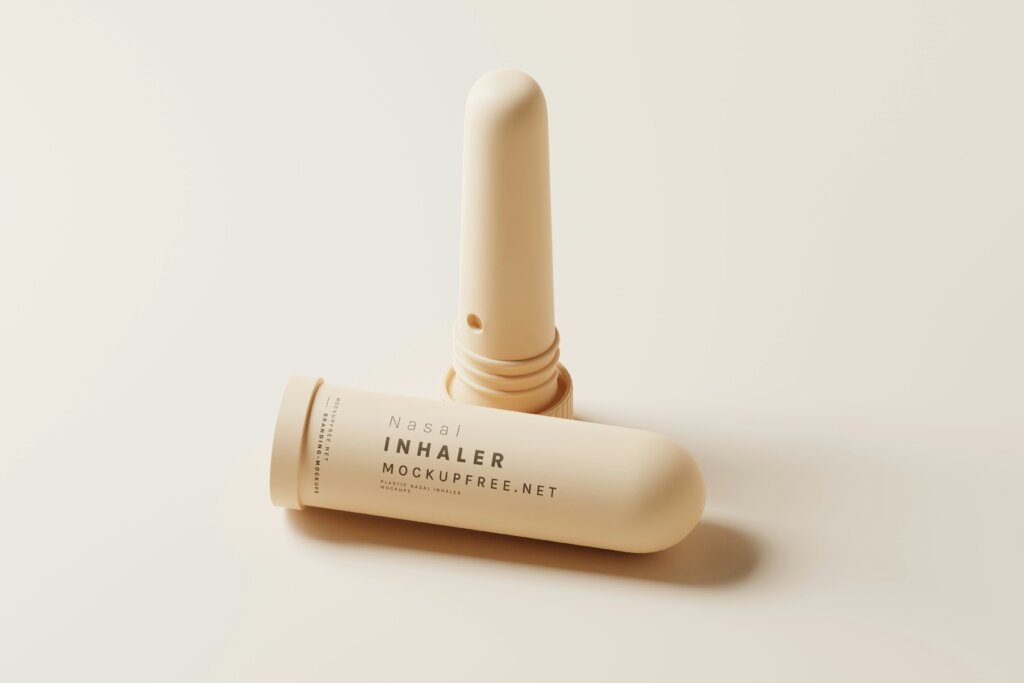
A practical example: medical inhalers
Consider the humble asthma inhaler. It looks simple, but it requires precise alignment between nozzle, canister housing, and actuation mechanism.
- Traditional method: mould separate parts, assemble them, test fit. Errors lead to waste.
- In-mould assembly method: the nozzle and housing are integrated in one cycle. Inserts like valves can be overmoulded directly.
Result? Lower cost per unit, tighter tolerances, and improved reliability for millions of patients.
What this means for business leaders
If you’re scaling a new product, every inefficiency compounds. Every extra step in production adds cost and risk.
Choosing in-mould assembly is not about following a trend, it’s about future-proofing your operations. It forces you to design differently, think holistically, and partner with manufacturers who understand more than just moulding.
This is where companies like SDI Plastics stand apart: guiding businesses not only through tooling and material selection but through strategic choices about how to simplify assembly and unlock scalejection moulding helps manufacturers deliver not just parts, but reliability, harvest after harvest.
Book your free consultation
Give us a call to book your free consultation and learn how much value can be added to your business with SDI Plastics by your side.