Mastering surface grinding for injection moulding: The key to unmatched quality and durability in manufacturing
Blog
Mastering surface grinding for injection moulding: The key to unmatched quality and durability in manufacturing
Authored By: SDI Plastics
In modern manufacturing, where precision is everything, surface grinding stands tall as one of the most critical processes in injection mould toolmaking. It’s more than just a finishing step, it is the silent architect of product quality, durability, and dimensional consistency in plastic components.
Whether you’re crafting medical syringes, automotive interior parts, or high-precision electronics housings, the perfection of your end plastic product often hinges on the surface integrity of your mould. And that integrity begins at the grind.
Why surface grinding matters in injection moulding
Surface grinding plays a vital role in creating high-tolerance injection moulds that can withstand years of operation under high pressure and temperature cycling. It does this by:
- Removing microscopic surface irregularities
- Flattening the mould block to exact dimensions
- Enhancing polishability and reducing tool stress
- Enabling consistent demoulding and smoother flow of molten plastic
An expertly ground mould ensures each injected shot of plastic produces a part that looks, fits, and performs identically. In high-volume production, this uniformity is not a bonus, it’s a baseline.
Grinding plastics begins with better moulds
While grinding plastics refers to post-production size reduction of plastic parts for recycling or reshaping, the process is intrinsically connected to surface grinding in tooling. The cleaner and more precise the tool, the fewer downstream defects in plastic parts, reducing the need for corrective grinding or trimming later.
With plastics getting more advanced, think fibre-filled, UV-stable, impact-resistant grades, the moulds must meet tighter tolerances. Surface grinding becomes not just important, but mission-critical to the injection moulding process.
The basics of surface grinding for mouldmaking
At its core, surface grinding involves a rotating abrasive wheel and a reciprocating workpiece table. The goal? To achieve flat, dimensionally accurate surfaces on steel or aluminium blocks used to build injection moulds.
Key grinding variables:
- Abrasive Type: Aluminium oxide for general use, CBN or diamond for hardened steels
- Grit Size: Coarse grit (60–80) for material removal, fine grit (120–200) for finishing
- Bond Type: Vitrified bonds for durability and cooler grinding
- Feed Rate: Influences removal rate and surface finish
- Coolant Flow: Prevents heat buildup and helps in debris evacuation
The precision and repeatability offered by advanced surface grinders ensure minimal deviation across mould cavities and inserts, especially vital for multi-cavity tools.
Advanced grinding machinery used in precision toolrooms
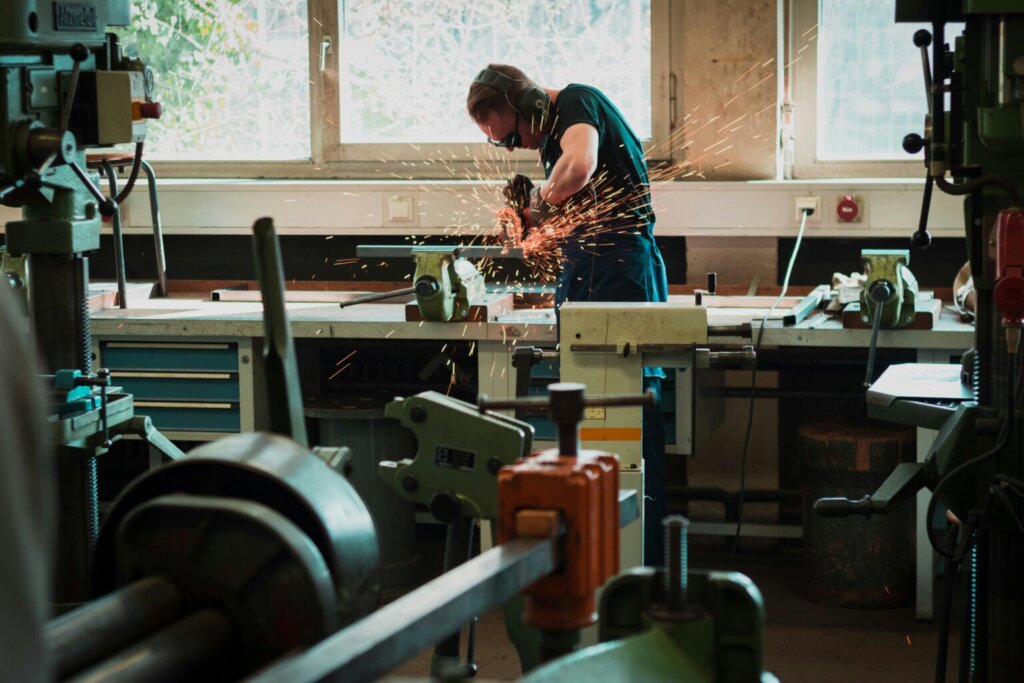
Today’s high-end mould shops rely on far more than a manual grinder. Cutting-edge equipment and automation now define how surface grinding is done:
1. CNC surface grinders
Modern computerised grinders offer programmable 3- to 5-axis movement for complex part geometries. Granitan or epoxy-granite bases deliver vibration absorption and thermal stability, critical for micron-level precision.
2. Diamond & CBN Grinding Wheels
These ultra-hard wheels allow consistent grinding on hardened tool steels above 60 HRc. They also reduce dressing frequency and maintain sharpness, reducing thermal damage to the workpiece.
3. Robotic grinding cells
Robotic arms for part loading/unloading, inline probing, and automatic wheel dressing turn grinding into a 24/7 high-productivity process. These systems also minimise human error and operator fatigue.
4. Synthetic coolants
Using water-miscible or fully synthetic coolants extends wheel life, reduces heat cracks, and maintains dimensional control, especially useful when grinding hardened steels for high-precision plastic moulds.
Multi-Stage grinding techniques for injection moulds
In practice, surface grinding isn’t a one-step process. Skilled toolmakers adopt a staged approach, especially when crafting complex tools.
Rough Grinding
Uses coarse wheels (around 60–80 grit) for rapid material removal. Ideal for bringing oversized blanks down to pre-finish dimensions.
Finish Grinding
Finer grit wheels (100–200 grit) offer improved finish and tight dimensional control. Final cuts often go as shallow as 0.01–0.02 mm.
Creep Feed Grinding
A slow but deep-cut process used for hardened steels. It ensures high stock removal without overheating, ideal for intricate profiles.
Contour Grinding (CIA)
Involves custom-shaped wheels for creating curved and non-flat surfaces, vital in modern complex mould designs.
Why surface grinding comes before polishing
Here’s where the precision game tightens. Polishing might seem like the final aesthetic touch, but its efficiency and effectiveness directly depend on how well the surface was ground.
Key Interdependencies:
- Grinding-induced scratches need to be shallow and uniform for easier polishing.
- Deeper defects from improper grinding significantly increase polishing time and labour.
- A well-ground surface minimises polishing effort and maximises clarity in plastic parts, especially for transparent mouldings like PET bottles or medical tubing.
In short, grinding sets the stage, get it right, and polishing becomes faster and more predictable.
Surface grinding’s role in ensuring plastic part quality
A poorly ground mould surface doesn’t just affect aesthetics. It can compromise demoulding, dimensional integrity, and product lifespan. Since injection moulding operates under immense pressure and thermal cycles, any surface defect can become a stress concentrator, leading to:
- Micro-cracks in the mould
- Premature tool failure
- Poor part release and flashing
- Uneven flow of molten plastic
For industries like medical, electronics, and automotive, this is unacceptable. Reliable surface grinding ensures every cycle delivers parts that meet strict specifications, reducing rework, scrap, and customer complaints.
Best practices for optimising surface grinding in toolmaking
Skilled Operators
Grinding is part art, part science. Certified technicians with hands-on experience are key. They routinely verify results with instruments like profilometers and bore gauges, ensuring repeatability and accuracy.
CNC Upgrades
Upgrading to 3- and 5-axis grinders reduces setup times and increases throughput. Features like automatic wheel balancing, spark-out detection, and digital interface improve consistency.
Cleanroom-Like Standards
To avoid introducing contaminants, many shops now adopt cleanroom protocols, especially when producing moulds for medical-grade or food-safe plastics.
Coolant Management
Coolant concentration, temperature, and recycling schedules are monitored closely to prevent corrosion, bacterial growth, and dimensional inconsistencies.
Preventive Maintenance
Routine maintenance, including spindle inspection, wheel dressing, and vibration analysis, keeps machines in top condition and avoids costly downtime.
The connection between surface grinding and grinding plastics
The term grinding plastics typically refers to recycling plastic waste by pulverising it into granules for reuse. But its success starts with mould quality.
Well-ground, polished moulds minimise post-processing. That means fewer burrs, flashings, or imperfections that would otherwise require trimming or grinding. It streamlines the entire manufacturing ecosystem, from injection to regrind.
In essence, quality surface grinding at the mould stage reduces the need for grinding plastics later in the product lifecycle.
Conclusion: surface grinding as a competitive advantage
Far from being a mere background process, surface grinding is the unsung hero of high-performance plastic injection moulding. It underpins:
- Dimensional accuracy
- Faster cycle times
- Superior polish and finish
- Lower tool maintenance
- Consistent demoulding
For manufacturers competing in a global market, this is no longer optional. It’s essential. As plastics evolve in complexity and performance demand, so must the skill and technology behind toolmaking.
By combining automation, CNC precision, robust process control, and expert craftsmanship, manufacturers unlock new frontiers in mould longevity and plastic product consistency, while keeping costs under control.
Book your free consultation
Give us a call to book your free consultation and learn how much value can be added to your business with SDI Plastics by your side.